 Dry Home Advice
 UK buyer guide
Best dehumidifier UK: practical picks for damp, condensation, laundry and cold rooms
The best dehumidifier is not simply the biggest model with the highest litre rating. In UK homes, the right choice depends on whether the room is heated, how much moisture you are producing, how often you dry laundry indoors, and whether the problem is damp air or an actual building defect.

How this guide is put together
Ranked by real UK damp problems, not just headline litres
We rank products by problem fit: bedrooms, flats, cold rooms, laundry drying, window condensation, humidity monitoring and small-space moisture control. We prioritise room temperature, stated extraction, tank size, noise, portability, running-cost risk, product category fit and whether the machine solves the actual problem described by UK searchers.
Product prices and availability change often. We do not publish live prices on this page; use the retailer page to check the latest details before buying.
Start with the right shortlist
If you are choosing today, use this page for ranked UK picks. If you are still diagnosing the problem, match your room to a product path first so you do not buy a machine that is too small, too loud or wrong for a cold space.
Ready to compare now?
Quick picks by problem
These are not live prices or guarantees. Use the Amazon buttons to check the current product page, availability, delivery and returns before buying.
 Best cold room pick Meaco DD8L Portable/Compact
 Desiccant option for garages, conservatories, utility rooms and colder winter spaces.
Check on Amazon UK Best budget starter Pro Breeze 12L/Day
 A proper electric compressor model for smaller heated rooms and first-time buyers.
Check on Amazon UK Best bedroom option De’Longhi DEX214F
 A mainstream appliance-brand route for bedrooms, flats and quieter everyday use.
Check on Amazon UK Best laundry option Pro Breeze 30L Smart
 Higher-capacity option for repeated indoor laundry drying and heavier moisture loads.
Check on Amazon UKBest dehumidifiers for UK homes: our shortlist
For most buyers, the decision is less about brand and more about matching the technology to the room. A compressor model is usually the right route for a heated bedroom, flat or living room. A desiccant model is the better first look for garages, cold conservatories, caravans, unheated utility rooms and winter spaces. Passive absorbers and window vacs can be useful, but they solve smaller or narrower problems.
Desiccant Best for cold rooms and winter use
Meaco DD8L Portable/Compact
Cold environments and laundry drying
- Best for: Garages, cold bedrooms, utility rooms
- Price tier: Mid
- Why ranked here: Desiccant design makes this a strong choice where compressor units can struggle in colder spaces.
Current Amazon price changes often — check live price on Amazon UK.
Compressor Best value starter dehumidifier
Pro Breeze 12L/Day
Budget-to-mid UK bedrooms and small homes
- Best for: Budget flats, spare rooms, mild condensation
- Price tier: Budget / mid
- Why ranked here: Good entry point for readers who want a proper electric unit without jumping straight to premium pricing.
Current Amazon price changes often — check live price on Amazon UK.
Compressor Best mainstream brand option
De’Longhi DEX214F
Quiet-use comparisons and bedrooms
- Best for: Bedrooms and brand-conscious buyers
- Price tier: Mid
- Why ranked here: Strong household brand fit; useful for readers who prefer appliance-brand familiarity.
Current Amazon price changes often — check live price on Amazon UK.
Compressor Best for heavy moisture and laundry loads
Pro Breeze 30L Smart
Large homes, laundry drying, heavier moisture
- Best for: Large rooms, indoor laundry, severe condensation
- Price tier: Premium
- Why ranked here: High-capacity option for readers whose main issue is repeated laundry drying or heavier damp loads.
Current Amazon price changes often — check live price on Amazon UK.
 Desiccant
 Best desiccant alternative
EcoAir DD1 Classic MK6
Cold rooms, garages and winter conditions
- Best for: Cool rooms and winter condensation
- Price tier: Mid
- Why ranked here: A credible cold-room alternative where low-temperature performance matters more than headline litres.
Current Amazon price changes often — check live price on Amazon UK.
 Window-condensation helper
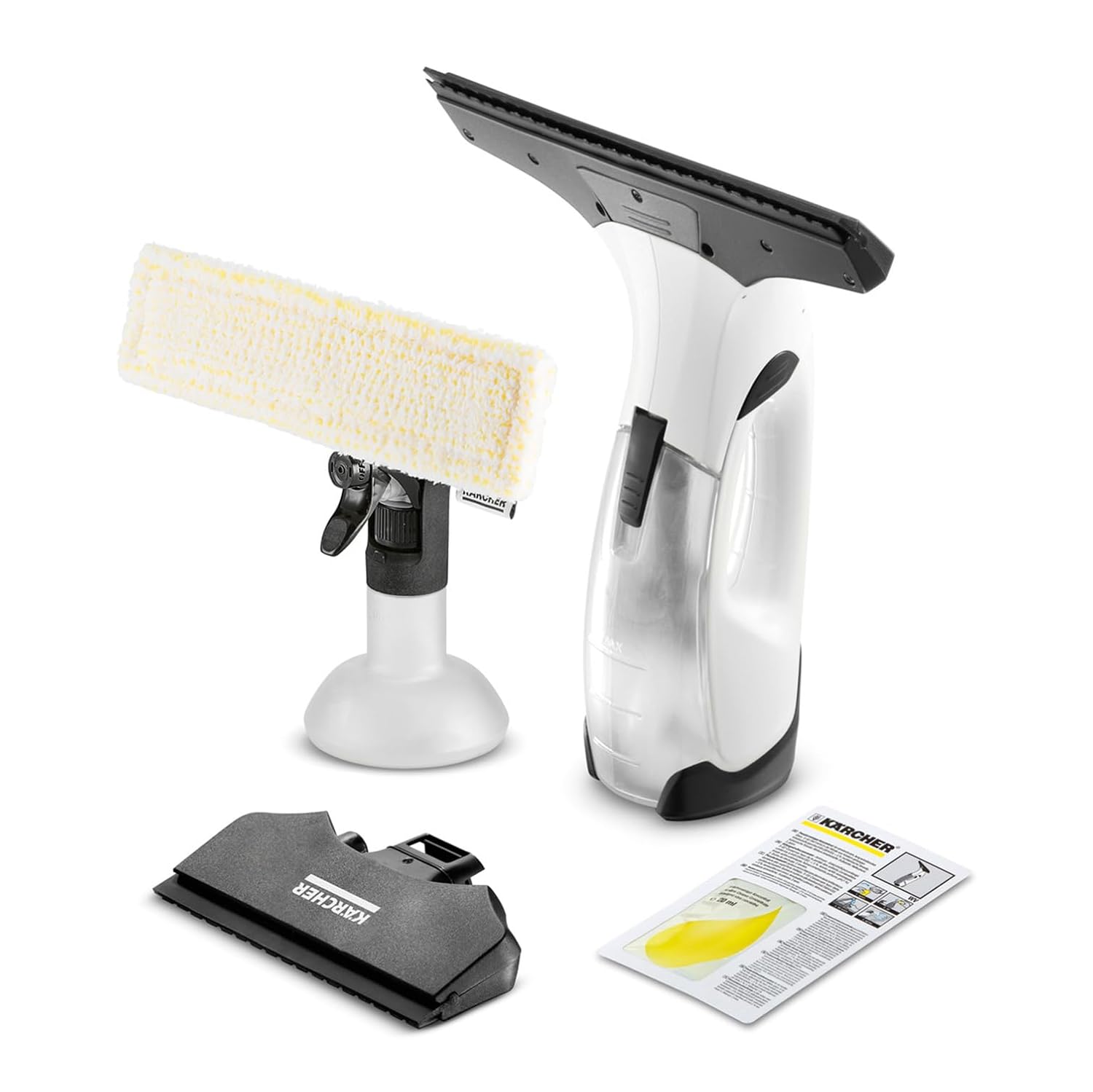
 Best quick fix for wet windows
Kärcher Window Vac WV 2 Plus N
Removing daily window condensation
- Best for: Morning window water and glass clean-up
- Price tier: Accessory / mid
- Why ranked here: Not a damp cure, but a strong adjacent purchase for people waking up to streaming glass.
Current Amazon price changes often — check live price on Amazon UK.
 Humidity monitor
 Best smart humidity monitor
Govee WiFi Room Thermometer Hygrometer
Remote smart-home monitoring
- Best for: Remote monitoring and trend tracking
- Price tier: Accessory
- Why ranked here: Good upsell for readers who need proof that humidity control is actually working.
Current Amazon price changes often — check live price on Amazon UK.
 Humidity monitor
 Best low-cost first purchase
ThermoPro TP53
Low-cost humidity checks
- Best for: Checking if you really need a dehumidifier
- Price tier: Accessory
- Why ranked here: Cheap measurement is often the smartest first step before buying a larger appliance.
Current Amazon price changes often — check live price on Amazon UK.
 Passive moisture control
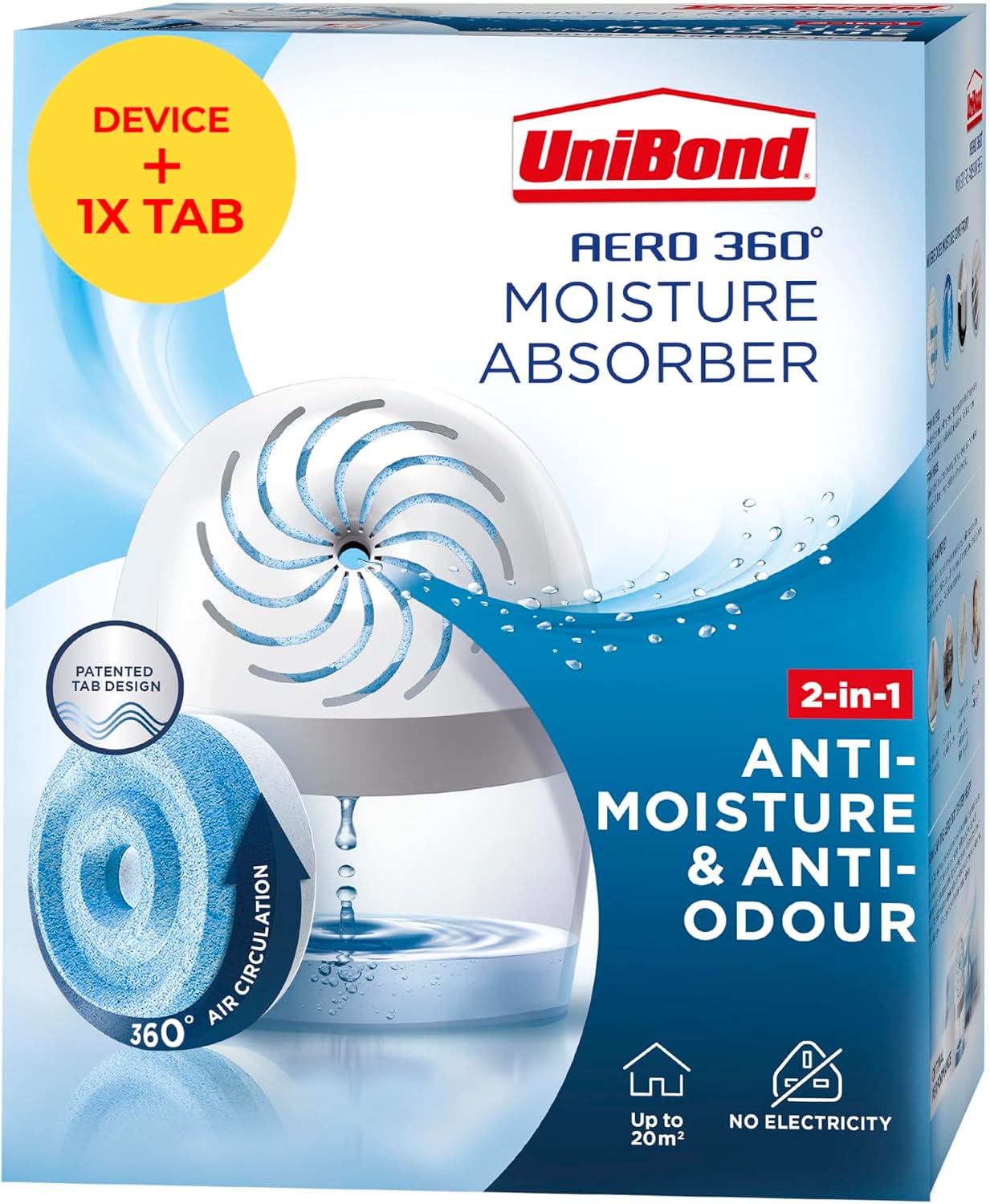
 Best passive moisture absorber
UniBond AERO 360 Device
Small cupboards, wardrobes, low-budget moisture control
- Best for: Wardrobes, cupboards and tiny spaces
- Price tier: Budget accessory
- Why ranked here: Useful for enclosed spaces, but we clearly state it is not equivalent to an electric dehumidifier.
Current Amazon price changes often — check live price on Amazon UK.
 Laundry helper
 Useful laundry accessory
Swan Electric Clothes Dryer / Heated Airer
Indoor laundry drying comparison
- Best for: Faster indoor drying alongside humidity control
- Price tier: Mid
- Why ranked here: Works best when paired with ventilation or dehumidification so moisture is not simply moved into the room.
Current Amazon price changes often — check live price on Amazon UK.
 Mould treatment
 Best cleaning add-on
HG Mould Spray
Cleaning mould after fixing the moisture source
- Best for: Visible mould after the moisture source is fixed
- Price tier: Budget accessory
- Why ranked here: Cleaning product only; it belongs after diagnosis and moisture control, not as the whole solution.
Current Amazon price changes often — check live price on Amazon UK.
Which dehumidifier should you buy for your problem?
Use the table below if you know the symptom but are not sure what to buy. This is where many people waste money: they buy a tiny absorber for a whole room, a warm-room compressor for a freezing garage, or a large loud unit for a small bedroom that only needs controlled overnight humidity.
Compressor vs desiccant: the UK buying mistake
The biggest mistake is buying by litre rating without checking room temperature. Compressor dehumidifiers remove water by cooling air over coils. They are usually more efficient in normal heated rooms, but performance can drop in colder spaces. Desiccant dehumidifiers use a moisture-absorbing rotor and tend to keep working better in cold rooms, but they often use more power in warm conditions.
That means the “best” dehumidifier changes by room. A Meaco DD8L-type desiccant machine can make sense in a garage or winter utility room. A compressor model such as a 12L Pro Breeze-style unit or a quieter appliance-brand model can be the smarter choice in a bedroom. A higher-capacity 30L machine can be useful for repeated laundry drying, but it is overkill for a single mild condensation patch.
- Choose compressor for heated bedrooms, flats, living rooms and everyday condensation.
- Choose desiccant for cold rooms, garages, conservatories, caravans and winter utility rooms.
- Choose a window vac if the immediate issue is wiping glass every morning, but humidity is otherwise controlled.
- Choose a hygrometer first if you do not know whether the room is sitting above 60–65% RH.
How much extraction do you really need?
Headline extraction is usually measured in ideal test conditions, not in your damp spare bedroom in February. A 12L model does not always remove 12 litres every day in the real world, and an 8L desiccant model can outperform a larger compressor in a colder room. Instead of chasing the largest number, start with the moisture source.
A small bedroom with morning window condensation may only need steady overnight humidity control. A family home drying laundry indoors several times a week needs more tank capacity, stronger airflow and a laundry mode. A garage needs cold-weather performance more than a fashionable smart app. A wardrobe or cupboard may only need a passive absorber or better ventilation.
Prioritise noise, auto humidity control and a tank you can empty easily.
Prioritise laundry mode, tank size and continuous drainage if available.
Prioritise low-temperature performance over headline litres.
What to check before buying
Before spending money, measure the room for a few days. Put a hygrometer near the problem wall or window, not beside a radiator. If the room sits above 60–65% RH for long periods, a dehumidifier is more likely to help. If the room is below 55% RH but still has mould, look for cold bridges, leaks, insulation gaps or ventilation issues instead.
- Noise: bedroom machines need a tolerable low setting. Laundry machines can be louder if they run in a utility room.
- Tank size: small tanks are fine for mild damp; heavy laundry loads need more capacity or drainage.
- Weight: if you move the unit upstairs, weight matters more than a smart app.
- Auto mode: humidity targeting helps avoid running the machine longer than needed.
- Drainage: continuous drain is useful in garages, utility rooms and heavy-use spaces.
- Filter access: if cleaning the filter is awkward, people stop doing it.
Best dehumidifier by room
A room-by-room choice is often more accurate than a generic “best overall” pick. UK homes have very different moisture patterns: a north-facing bedroom behaves differently from a utility room full of wet laundry, and a garage in January behaves differently from a warm flat in September.
Best dehumidifier for bedrooms
For bedrooms, prioritise low noise, automatic humidity control and a tank that is easy to empty. A quiet compressor model normally makes more sense than a desiccant unit if the bedroom is heated. The goal is not to make the room bone dry; it is to keep humidity in a comfortable band and stop overnight condensation building on cold glass and external walls.
Best dehumidifier for flats
Flats often suffer because cooking, showering and laundry all happen in a smaller sealed space. A 10L to 12L compressor model is usually the first place to look. If the flat has no outside drying space, choose a unit with a laundry mode and avoid tiny tanks that need constant emptying. A separate humidity monitor is useful because flat humidity can jump quickly after showers and cooking.
Best dehumidifier for garages and conservatories
Cold rooms are where many buyers choose the wrong technology. A compressor model can still remove moisture, but performance drops as the room gets colder. A desiccant unit is usually the stronger choice for a garage, conservatory, caravan, shed-style utility room or spare room that is not heated properly through winter. This is why we separate cold-room recommendations from everyday bedroom picks.
Best dehumidifier for drying clothes indoors
Laundry drying is a heavier moisture problem than a bit of morning condensation. Look for stronger airflow, a laundry mode, a tank that is not tiny and a sensible place to run the machine. Shut the laundry in one room where possible, run the dehumidifier near the clothes but not pressed against them, and ventilate briefly after cooking or showering so the machine is not fighting every moisture source in the house at once.
Best dehumidifier for mould prevention
Mould prevention is about keeping surfaces dry enough that spores do not thrive. A dehumidifier helps when the driver is condensation and high indoor humidity, especially around cold walls, window reveals and wardrobes. It will not fix mould caused by a leak, damp masonry, failed roofline or blocked gutter. If the wall gets wet after rain, a product shortlist is the wrong starting point.
When not to buy a dehumidifier yet
If water is entering from a roof fault, plumbing issue, failed seal, blocked gutter, rising damp or penetrating damp, a dehumidifier can hide symptoms without fixing the source. It can help dry the room temporarily, but the moisture will return. Strong mould smell, crumbling plaster, tide marks, damp patches after rain or a single wall that stays wet need investigation before a product purchase.
If the issue is only water on the inside of bedroom windows in the morning, the first step may be cheaper: monitor humidity, improve ventilation, avoid drying laundry in that room, and use a window vac for daily glass clean-up. Buy the dehumidifier when the measurements show persistent high humidity or the problem is affecting several areas.
Read the shortlist as a set of trade-offs, not a league table
A ranked list is useful only when the ranking reason matches your home. Our first cold-room pick is not automatically the first choice for a warm bedroom, and our laundry pick is not automatically the most comfortable machine to sleep beside. Start with the problem table, follow the specialist guide, and return to the shortlist once you know the technology and capacity class you need.
For a heated one- or two-bedroom home with ordinary condensation, a compact compressor is the normal starting point. It should have an adjustable humidistat, an accessible filter and a noise setting you can tolerate where it will run. For repeated indoor laundry, extraction headroom and airflow become more important. For a genuinely cold space, low-temperature suitability can outweigh the efficiency advantage a compressor has in warmer air.
Do not treat an editorial score as a universal measurement. It is our assessment of fit across the stated use cases, not a copied retailer rating and not a claim that we physically tested every machine. Each internal review explains the evidence and limitations behind a recommendation. Use the separate Amazon button only when you are ready to check the current listing and manufacturer details.
Capacity by moisture load, not floor area alone
Room size is a useful boundary, but it does not describe the whole job. A compact bedroom with two people sleeping behind a closed door can have a sharp overnight humidity rise. A larger living room with steady heating and little moisture production can be easier to control. Laundry, shower steam, cooking, drying building materials and open connections to other rooms all increase the load a machine has to manage.
For mild bedroom condensation, begin with a 10L–12L-class compressor and a measured target rather than continuous maximum operation. For a flat where showering, cooking and laundry overlap, consider whether one centrally placed medium-capacity unit can recover the shared air, or whether moving a smaller unit between closed rooms is more realistic. For repeated family laundry, a 20L–30L-class compressor can offer faster recovery in a heated room, provided its noise, footprint and tank routine fit the household.
The published litres-per-day figure is a comparison point under specified test conditions. Your extraction will vary with temperature and humidity, usually falling as the air becomes cooler or drier. The useful outcome is not “collect the rated litres”; it is “bring the room back toward the target band before condensation persists”. Measure recovery after the moisture event and size up only if the room repeatedly fails to recover.
How to compare running cost without a misleading daily claim
Electricity cost depends on input power, actual run time and your tariff. Use the manufacturer’s stated wattage as an input, convert watts to kilowatts, multiply by hours used, then multiply by your electricity rate. The reusable method is watts ÷ 1,000 × hours × tariff. We deliberately do not publish a fixed Amazon price or a universal “cost per day”, because tariffs, control cycles and room conditions change.
Compare the likely job, not wattage in isolation. A lower-powered machine that runs for much longer may consume more energy over the full drying cycle than a stronger unit that reaches the target and cycles off. A desiccant model commonly uses more power than a compressor in a warm room, but can be the rational choice in a cold room where compressor extraction falls. Auto mode can reduce waste only when the sensor is unobstructed and the target is sensible.
Run a household-specific scenario in our dehumidifier running-cost calculator. Enter the model’s stated power, your expected hours and the tariff shown on your bill. Then test a second scenario with a shorter or longer run time. This gives a range you can use when comparing capacity, rather than pretending that every home will reproduce one laboratory or marketing figure.
Noise, placement and drainage decide whether the machine gets used
Noise specifications are helpful for comparing modes, but the room changes how a machine sounds. Hard floors, corners and hollow furniture can amplify vibration. A low fan setting may be comfortable in a daytime living room but still distracting beside a bed. If sleep matters, plan to dry the room before bedtime or place the unit outside the bedroom with the door arranged for airflow, rather than assuming any appliance will be silent overnight.
Leave the clearances required by the manual around the inlet and outlet. Do not hide the unit behind curtains, wedge it beside an airer, or aim warm exhaust into one garment while blocking circulation through the rest. Put the hygrometer away from the exhaust so it measures representative room air. If you move one machine between rooms, allow it to stand as the manufacturer directs before restarting it.
A larger tank reduces emptying frequency but adds weight. Continuous drainage can be valuable in a utility room or garage, but only when the hose can fall continuously to a suitable drain without kinks, freezing risk or a trip hazard. Never assume a model includes a pump. Check the manual and listing, and keep a routine for filter cleaning and tank hygiene.
Choose for the way your household will operate it
For a bedroom: measure the morning peak for several days, reduce avoidable moisture, and choose a quiet compressor with automatic humidity control if the room is normally heated. Position it away from bedding and curtains. If the room becomes very cold in winter, revisit the technology choice instead of assuming the summer setup will behave identically.
For a flat: identify whether the main load comes from showers, cooking or laundry. Use extraction at source first. A dehumidifier can shorten the recovery period, but an open-plan flat may require more capacity than one small closed bedroom. Check whether moving the unit is practical and whether the tank can be emptied without carrying it over carpets or stairs.
For laundry: create a contained drying zone, space the clothes, start the machine when the wet load enters the room, and continue until humidity recovers. Capacity and airflow matter more than a decorative smart feature. Follow the dedicated laundry dehumidifier guide for load and temperature choices.
For a garage, caravan or conservatory: verify the normal winter temperature and the model’s operating range. Desiccant technology is often the stronger starting point in genuinely cold spaces. Continuous drainage may help in an unattended area, but leaks, rain ingress and porous walls still need repair rather than permanent symptom masking.
A seven-day check before committing to a larger appliance
On the first two days, record temperature and relative humidity in the morning and evening without changing every habit at once. Note showers, cooking, laundry and whether windows or walls are wet. On days three and four, improve extraction at the moment moisture is produced and keep trickle vents clear where appropriate. Move furniture slightly away from cold external walls so air can circulate.
On days five and six, compare how quickly the room recovers after a moisture event. If humidity remains elevated for hours, or several rooms develop condensation, an active dehumidifier route becomes more credible. If the reading recovers but one patch remains wet, inspect that location for a cold bridge, leak or external defect. On day seven, choose the smallest class that fits the demonstrated load and temperature.
This check is not a demand to postpone urgent action. Address active leaks, electrical risk and significant mould promptly. It is a way to prevent an uncertain buyer from selecting an oversized appliance when a hygrometer, extractor repair, ventilation routine or building repair is the correct first step.
Transparent selection method
What our rankings mean—and what they do not mean
Dry Home Advice compares manufacturer-published specifications, operating type, stated capacity, tank and drainage arrangements, controls, portability, intended room conditions and the practical needs described in our UK problem guides. We then rank by use-case fit. Cold-room performance, bedroom noise risk and laundry capacity are treated as different decisions rather than collapsed into one “best” claim.
We do not claim hands-on testing unless a page explicitly documents a real protocol and evidence. We do not copy Amazon star ratings or customer-review text, and retailer popularity does not determine the order. Editorial scores represent our documented product analysis. They should be read beside the limitations and nearest alternatives in each internal review.
Availability and product details can change. Before buying, follow the internal review, verify the current manufacturer specification and check the retailer listing. We may earn a commission from qualifying purchases, but that does not change the price you pay or permit a manufacturer to buy a ranking.
Guide and linked-product details last checked: 12 July 2026. Recheck after a model revision, availability change or material specification update.
Frequently asked questions
What is the best dehumidifier for most UK homes?
For a normal heated UK home, start with a compressor dehumidifier around the 10L to 12L class. It is usually the best balance of extraction, running cost, noise and size for bedrooms, flats and everyday condensation. If the room is cold and unheated, choose a desiccant model instead.
Is a desiccant or compressor dehumidifier better in the UK?
A compressor dehumidifier is usually better in warm, lived-in rooms. A desiccant dehumidifier is better in colder spaces such as garages, conservatories, caravans, utility rooms and spare rooms that sit below about 15 °C in winter. The room temperature matters as much as the litre rating.
What size dehumidifier do I need for a bedroom?
For a single bedroom or small flat, a 10L to 12L compressor model is usually the practical starting point. Choose a larger model if the problem is repeated indoor laundry, multiple rooms, or persistent damp. Use a hygrometer first if you do not know whether the room is actually above 60–65% relative humidity.
Do passive moisture absorbers work as well as electric dehumidifiers?
No. Passive moisture absorbers can help in cupboards, wardrobes and very small enclosed spaces, but they are not a replacement for an electric dehumidifier in a damp bedroom, flat or laundry room. They remove moisture slowly and have no fan-driven air movement.
Should I buy a dehumidifier if I have mould?
A dehumidifier can help if mould is being driven by condensation and high indoor humidity. It will not fix leaks, failed guttering, rising damp, penetrating damp or plumbing defects. If water is entering the building, fix the source first and use the dehumidifier only as part of drying and prevention.
What humidity should a UK home be?
A practical target for most UK homes is roughly 40–60% relative humidity. Below 40% can feel dry for some people; above 60–65% increases condensation and mould risk. Bedrooms often spike overnight, so measure morning humidity near the problem window or outside wall.
Are bigger dehumidifiers always better?
No. Bigger machines can dry faster and handle laundry better, but they can also be louder, heavier and more expensive to run. A small damp bedroom and a laundry-heavy family home need different choices. Match the machine to moisture load, room temperature and noise tolerance.
Popular next reads
If you are still choosing between two similar models, start with the room where the damp is worst and buy for that room first. A machine that is perfect for a warm bedroom may disappoint in a cold garage; a heavy-duty laundry unit may be more than you need for one small flat. The safest buying route is: measure humidity, identify the moisture source, match the technology to the temperature, then compare the final products on noise, tank size and ease of use.