 Dry Home Advice
 Laundry buyer guide
Best dehumidifier for drying clothes UK
If indoor laundry is your main damp problem, choose by moisture load and room temperature. A small unit can help occasional drying, but regular laundry needs enough extraction, airflow and run time to stop windows steaming up.

Quick buying route
For weekly laundry, start with capacity first
Choose the Pro Breeze 30L Smart for repeated loads in a heated room, the Meaco DD8L for a cold utility space, or the Meaco Arete Two 12L for balanced use in a heated flat or bedroom. A heated airer speeds evaporation, but the water still has to leave the air.
Best for frequent laundry in a heated room
The Pro Breeze 30L Smart is the first model to compare when repeated loads create heavy moisture in a normally heated room. Its larger extraction class provides more headroom than a compact bedroom machine. Choose the Meaco DD8L instead for a genuinely cold utility space, or a 12L-class model for occasional loads in a small heated room.
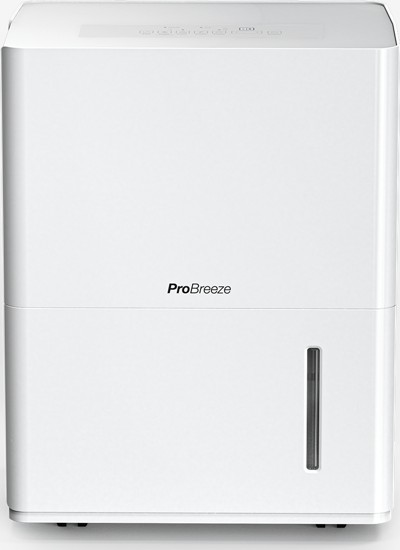
Research pick · UK
Pro Breeze 30L Smart
Best for: Large rooms, indoor laundry, severe condensation
Higher-capacity compressor option for repeated laundry loads.
Trade-off: Large and heavy compared with 12L models
Check humidity and likely running time before buying
If humidity stays above 60–65% while clothes dry, compare a stronger unit and calculate the likely electricity cost. The best machine is not simply the one with the lowest wattage: a weak unit running all day can cost more than a stronger unit that finishes sooner.
More extraction headroom for repeated indoor drying and heavier moisture.
Desiccant route for winter utilities, garages and colder drying spaces.
A strong all-rounder if you dry laundry in a normal heated flat or bedroom.
How much capacity does indoor laundry need?
The right size depends on how much wet washing enters the room, how warm the room stays and how quickly you need it ready again. Published litre-per-day figures are laboratory ratings, not a promise that a machine will remove that amount from a normal UK spare room every day. Use them to compare classes of machine, then judge the room and routine.
| Loads per week | Room temperature | Starting point | Noise priority | Drainage check | Best fit |
|---|---|---|---|---|---|
| One occasional load | Normally heated | 12L-class compressor | Prioritise a low fan setting if the room is occupied | A tank is usually practical | Small spare room or heated flat |
| Two to four loads | Normally heated | 20L-class compressor | Compare stated sound levels and modes | Check tank size; a hose can reduce interruptions | Regular household laundry |
| Four or more loads | Normally heated | 20–30L-class compressor | Capacity may matter more than minimum noise | Continuous drainage is useful if a safe drain is available | Repeated or overlapping family loads |
| Any regular pattern | Cold through winter | Desiccant model | Expect warmer exhaust air and compare fan settings | Check tank and hose options | Cold utility, garage or conservatory |
| One or two loads | Heated bedroom | Quiet 12L-class compressor | High: do not assume laundry mode is quiet | Prefer a tank that is easy to remove without spills | Small flat where footprint and sleep matter |
| Heated-airer sessions | Any contained indoor room | Measure RH; add active extraction when needed | Depends on whether the room is occupied | Plan for the faster release of water into the air | Airer plus ventilation or dehumidification |
Size up when: windows stream during every load, humidity remains above 60–65% for hours after drying, several loads overlap, or the drying space connects to the rest of the home. Do not size up blindly when: one wall is wet after rain, a pipe is leaking, or condensation is trapped inside double glazing.
Best laundry dehumidifiers to compare first
Research pick · UK
Pro Breeze 30L Smart
Best for: Large rooms, indoor laundry, severe condensation
Higher-capacity compressor option for repeated laundry loads.
Trade-off: Large and heavy compared with 12L models
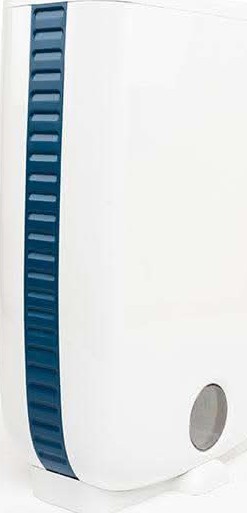
Research pick · UK
Meaco DD8L Portable/Compact
Best for: Garages, cold bedrooms, utility rooms
Desiccant technology suits cooler spaces.
Trade-off: Can use more power than a small compressor in warm rooms
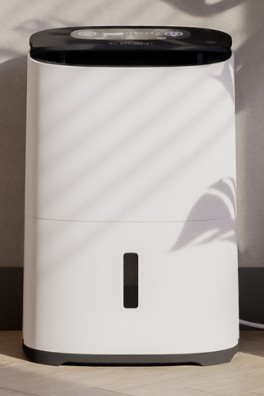
Research pick · Ireland
Meaco Arete Two 12L
Best for: Everyday condensation, bedrooms and flats
App control and a laundry mode for heated rooms.
Trade-off: Heavier than smaller budget models
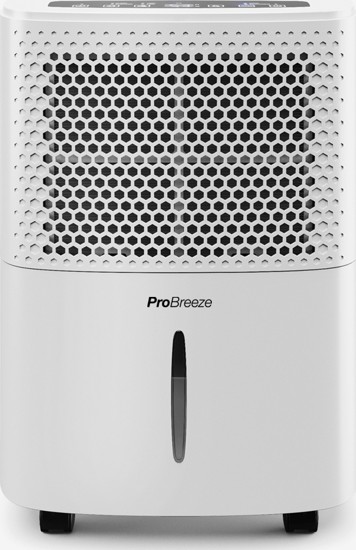
Research pick · UK
Pro Breeze 12L/Day
Best for: Budget flats, spare rooms, mild condensation
Compact compressor option for everyday condensation.
Trade-off: Smaller tank than larger premium models
What laundry mode actually changes
Laundry mode is normally a control programme, not a different moisture-removal technology. It may run the fan harder, target a lower humidity, or keep the compressor working for longer before cycling off. That can help dry washing faster, but it does not make an undersized machine equivalent to a larger one and it does not overcome poor placement.
Give dry air a route through the clothes. Leave gaps between garments, avoid pushing the appliance against a wall, and point the outlet so air moves around rather than straight into one item. Shut the drying-room door if safe to do so; otherwise the machine tries to treat the whole home while wet washing keeps adding moisture.
A model without a named laundry mode can still work if it has suitable extraction, continuous operation or a low target-humidity setting. Conversely, a tiny unit with a laundry button may be too slow for frequent family loads. Compare the machine, room and routine—not the badge alone.
Pro Breeze 30L, Arete Two 12L or a smaller budget model?
These are different jobs, not a universal league table. Match the drying room first, then compare the exact model. A 30L rating does not mean your washing contains 30 litres of water or that a load will dry in a fixed number of hours.
Swipe or scroll the comparison to see each model’s trade-offs and ordering checks.
| Candidate | Why compare it for laundry? | Reason to choose something else | Check before ordering |
|---|---|---|---|
| Pro Breeze 30L Smart | Capacity headroom for repeated loads in a heated room; continuous operation is more relevant than a laundry badge. | Too much machine for one occasional airer; footprint and stronger fan noise matter in occupied rooms. | Match the model code, tank, drainage and dimensions. Pro Breeze lists PB-15 and PB-20 as separate 30L models. |
| Meaco Arete Two 12L | Everyday humidity control plus occasional laundry in a heated flat; the manufacturer describes boosted airflow in Laundry Mode. | Do not assume the compact 12L version can keep up with overlapping family loads simply because it has a laundry programme. | Confirm it is Arete Two, the 12L capacity and the intended fan mode; night-mode noise is not laundry-mode noise. |
| Pro Breeze 12L | A smaller compressor candidate for occasional washing in a contained, heated room. | Not the first comparison for a cold utility or several simultaneous airers. | Compare the exact model’s controls and drainage, not specifications from a different 12L listing. |
| Meaco DD8L Portable/Compact | A desiccant reference for cold-room laundry rather than a direct compressor litre-rating comparison. | Its UK purchase route is held because the selected listing changed to DD8L Pro; this guide does not treat those as the same machine. | Use the cold-room selection guide and verify the model before buying. |
A heated airer is an addition, not an extraction substitute. If speed is the only problem and humidity recovers with ventilation, you may not need a new dehumidifier. If moisture stays high, compare the airer and dehumidifier roles before paying for both.
How we select the laundry shortlist
This is desk research and scenario-based selection, not hands-on drying-time tests. We prioritise room temperature, repeated moisture load, useful airflow, tank interruptions and occupied-room noise. The capacity table is a starting framework, not a tested loads-per-week specification or a promise of savings. We have not measured which model dries an identical load fastest.
For a fair comparison, check extraction at the same temperature and humidity where published. An operating range says the appliance can run there; it does not say it maintains its headline extraction in a chilly spare room. Sound figures are only comparable with their test conditions and fan mode. We do not borrow merchant star ratings or use a manufacturer’s advertised pence-per-hour figure as your bill.
Manufacturer references checked 7 October 2026: the Pro Breeze dehumidifier manual directory distinguishes the PB-15 Smart App model from the PB-20 Max Extraction model. Meaco’s Arete One versus Two explanation describes boosted laundry airflow and the distinction from night operation. These are manufacturer descriptions, not independent performance measurements. Confirm the selected retailer variant and current manual; similarly named products can change.
Read our editorial policy for the research standard. Affiliate commission does not establish suitability, and a model held for identity checking is not a live recommendation to purchase that listing.
A practical laundry running plan
- Measure before the load: note room temperature and relative humidity so you know the starting point.
- Use the smallest practical room: close the door where safe and keep clothes spaced for airflow.
- Start extraction immediately: do not wait until the windows are already wet.
- Use laundry or continuous mode: let the machine run through the main evaporation period rather than switching it off after one hour.
- Recheck after drying: the room should move back toward the 40–60% band, not stay above 65% into the night.
- Empty the tank and clean the filter: a full tank stops extraction and a dirty filter reduces airflow.
Running cost depends on watts and hours, not wattage alone. Use the running-cost calculator with the manufacturer’s wattage and your expected hours rather than relying on a generic “pence per day” claim.
Check one drying session before buying a bigger machine
If you already own a dehumidifier, record the room temperature, starting RH, chosen fan mode and time the load goes on the airer. Use a normal spun load with gaps between garments; do not change the room, load and appliance settings all at once. Keep vents required for safety open and follow the appliance’s clearance instructions.
- During drying: note whether RH is trending down or staying high, whether the tank fills and stops the machine, and whether air reaches the back of the airer. A full tank or packed clothes can explain slow drying without a capacity upgrade.
- At the finish: check thick seams and pockets rather than only the surface fabric. Log elapsed time and any interruptions. A humidistat reading near the appliance may differ from the far side of the room.
- After the load: check that room humidity recovers and windows do not remain wet into the night. If the clothes dry but damp returns without another load, investigate ventilation or building moisture instead of assuming more litres will fix it.
Compare whole-session electricity with the running-cost calculator; use measured energy if you have a suitable meter. Rated power multiplied by hours is only an estimate because the compressor may cycle. This is a household troubleshooting record, not a controlled product benchmark or a guaranteed drying schedule.
How to choose without wasting money
- Buy enough capacity: regular laundry usually needs more extraction than a mild bedroom-condensation problem.
- Contain the space: dry in the smallest practical room with airflow around clothes.
- Measure the room: if RH stays above 60–65% while drying, the setup needs more help.
- Do not rely on heat alone: a heated airer speeds evaporation but can still leave moisture in the room.
- Check temperature: a cold room can change the best technology from compressor to desiccant.
- Plan drainage: repeated laundry can fill a small tank quickly; continuous drainage may matter in a utility room.
When a dehumidifier is not the first fix
Indoor laundry is a genuine moisture source, but not every damp mark is caused by washing. If a patch worsens after rain, follows a plumbing route, leaves salts or damages plaster in one fixed area, investigate the building. A dehumidifier may dry the surrounding air while water continues entering the wall.
In bathrooms, extraction comes first. In bedrooms, move furniture away from cold external walls and check overnight humidity. In a rented home, keep dated photos and humidity readings so recurring defects can be reported clearly. Buy an appliance when airborne moisture is part of the pattern—not as a substitute for repair.
Laundry dehumidifier questions
What size dehumidifier is best for drying clothes?
A heated small room with one occasional airer can often start with a 12L-class compressor. Repeated family loads in a heated utility room usually justify comparing 20–30L-class compressors, while a genuinely cold drying space can favour a desiccant model. These classes are starting points, not guarantees: room temperature, airflow and moisture load all affect the result.
Is a 12L dehumidifier enough for drying clothes?
It can be enough for occasional laundry in a small heated room, especially when clothes are spaced well and the door is shut. If several loads overlap, windows remain wet or humidity stays above 60–65% for hours, compare a larger-capacity model rather than extending an undersized machine’s run time.
Should I choose a compressor or desiccant dehumidifier for laundry?
Choose a compressor as the usual efficient starting point in a normally heated room. Compare desiccant models when a utility room, garage or conservatory stays cold through winter, because low temperatures reduce compressor extraction. Check each model’s stated operating range before buying.
Does laundry mode dry clothes faster?
Laundry mode normally runs the fan harder, targets lower humidity or keeps extraction active longer. It can help, but it cannot compensate for an undersized machine, blocked airflow or a room that is too large and open.
Can I use a dehumidifier and heated airer together?
Yes. The airer moves water out of the fabric faster, while the dehumidifier removes that water from the room air. Keep garments spaced, follow both manufacturers’ clearance and safety instructions, and monitor humidity rather than covering the dehumidifier or placing it too close to wet clothes.
How long should a dehumidifier run when drying washing?
Run it from the start of the drying session and continue until the clothes are dry and room humidity is recovering toward the 40–60% range. The required hours vary by load, room and machine, so use a hygrometer and the appliance humidistat instead of relying on one fixed timer.
Still deciding?
Measure humidity, check room temperature and use the buyer finder before buying. If the problem is a leak, failed glazing, roof issue or penetrating damp, fix the cause first.