 Dry Home Advice
 Printable damp-control checklist
7-day condensation reset checklist
A simple one-week reset for UK and Irish homes with wet windows, musty bedrooms, indoor laundry moisture or early mould. Work through the steps first, then decide whether a dehumidifier, hygrometer, window vac or ventilation fix makes sense.
Use it as a fridge-door checklist
Print this page or save it to your phone. The aim is to separate everyday condensation from problems that may need repairs or professional advice.
Email reminder
Get occasional damp-control updates
Join the Dry Home Advice list for checklist updates, winter condensation reminders and new calculator/resource launches. No live calls or sales conversations.
Measure before you buy
- Put a hygrometer in the worst room, away from radiators and windows.
- Write down morning and evening humidity readings.
- Aim for a practical 40–60% indoor range, not a single perfect number.
Remove obvious moisture sources
- Cover pans, use lids and run the extractor when cooking.
- Keep bathroom doors closed during showers, then ventilate afterwards.
- Avoid drying laundry in bedrooms if another space is available.
Ventilate without chilling the whole home
- Use short purge ventilation: open windows wide for 5–10 minutes.
- Keep trickle vents open where safe and practical.
- Check that extractor fans are actually moving air, not just making noise.
Fix wet-window routines
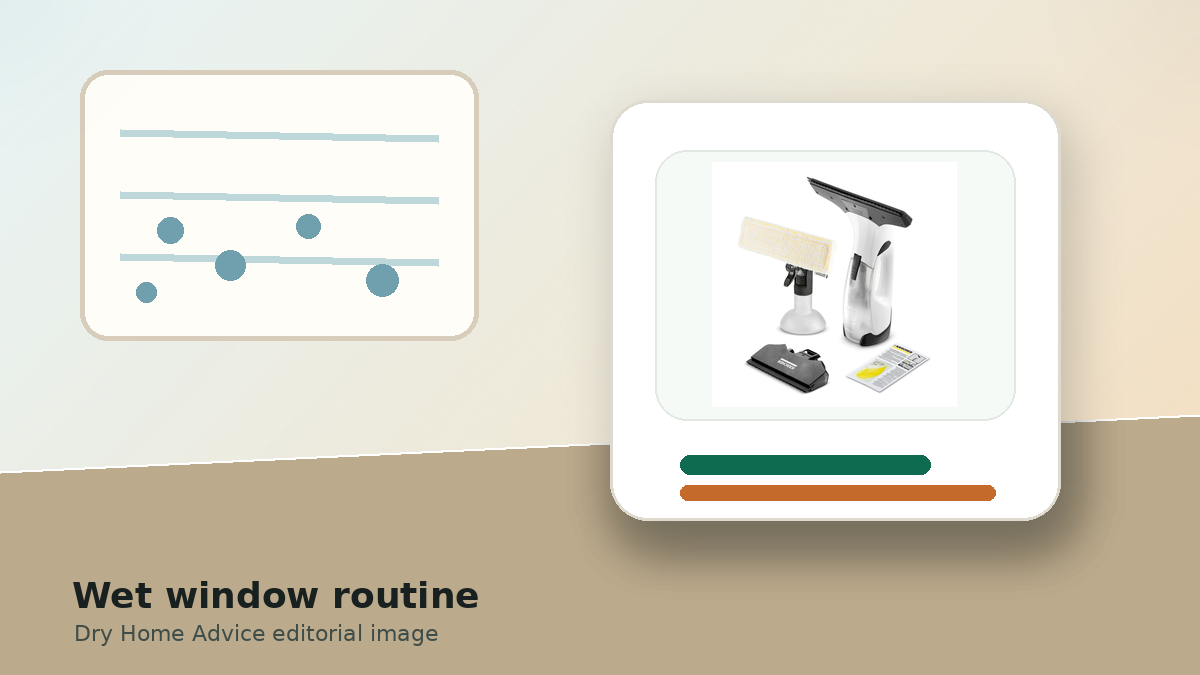
- Wipe or vacuum standing water from glass and sills each morning.
- Move curtains and blinds so air can reach cold glass.
- Check for failed double glazing if moisture is between panes.
Dry laundry with a plan
- Dry clothes in one ventilated room instead of spreading moisture around the home.
- Use a dehumidifier or extraction if indoor drying is frequent.
- Do not put wet laundry directly against cold external walls.
Create airflow behind furniture
- Pull wardrobes, beds and sofas a few centimetres away from external walls.
- Check corners, skirting and ceiling edges for early mould signs.
- Use passive absorbers only for small enclosed spaces, not whole-room damp.
Decide the right next purchase
- If humidity is still high, match the room and temperature to a dehumidifier type.
- If readings are normal but mould persists, look for cold bridges, leaks or failed ventilation.
- If damp patches appear after rain, seek property advice before buying products.
What to buy after the reset
If your humidity readings stay above the practical range, use the buyer finder rather than guessing; if you still need to measure properly or clear daily wet glass, compare a humidity monitor or window vac for condensation first. If damp appears after rain, spreads through walls, smells earthy, or comes with health symptoms, get qualified help before treating it as simple condensation.
Quick answer for 7-day condensation reset checklist
The practical answer is to start with the moisture source, not the appliance. For this topic, the usual issue is choosing a dehumidifier for a real UK home rather than buying the first model with a high capacity claim. The right route is to define the room, the moisture source, the usual temperature and whether the problem is prevention, clean-up or drying speed. That keeps the decision grounded in what is happening in the room, rather than in marketing claims or a single capacity number.
In most UK and Irish homes, condensation problems come from a mix of moisture production, cold surfaces, limited ventilation and uneven heating. A dehumidifier can help when humidity stays high, but it is not the only tool. Sometimes the better first purchase is a hygrometer, a window vac, a better drying routine, or simply a more consistent ventilation habit.
Use this guide as a decision path. If the problem appears daily, measure it for a week. If it appears only after showers, cooking or laundry, fix the routine first. If it appears after rain or on one patch of wall, treat it as a possible building issue before buying anything.
How to diagnose the problem before spending money
A good diagnosis starts with three questions: when does the moisture appear, where does it appear, and what changed in the room just before it appeared? Morning window droplets usually point to overnight humidity meeting cold glass. Damp patches after rain point in a different direction. A musty wardrobe against an outside wall can be about trapped air and a cold surface rather than a whole-house humidity problem.
Take readings with a hygrometer in the middle of the room, away from windows and radiators. Check once in the morning, once after cooking or showering, and once before bed. If readings sit above 60% for long periods, especially with visible condensation or mould smell, moisture control is worth taking seriously. If readings are normal but one patch stays wet, do not assume a dehumidifier will solve it.
For 7-day condensation reset checklist, keep notes for seven days. Write down the room temperature, relative humidity, weather, whether laundry was drying, whether windows were opened, and whether the glass or walls were wet. That simple log often shows whether the fix is ventilation, heating consistency, extraction, dehumidification or repair work.
What to buy first — and what not to buy yet
The safest buying route is usually: measure first if uncertain, clean up visible water or mould safely, then buy the smallest effective product for the room and moisture load. For this page, the most relevant buying route is a compressor for heated rooms, a desiccant for cold spaces, a window vac for standing water and a hygrometer when the diagnosis is unclear. That avoids the common mistake of buying a powerful-looking appliance for a problem that is actually local, seasonal or caused by poor airflow.
Do not buy yet if the damp is localised, appears after rain, has tide marks, leaves salts, or sits around a chimney breast, external corner or plumbing line. Those symptoms may need repair advice. A dehumidifier can dry air around the problem but it cannot fix water entering the building fabric.
Also avoid buying without measuring, confusing clean-up tools with prevention, or ignoring ventilation and heating routines. Those mistakes waste money and can make the room feel better for a few days while the underlying cause continues. The aim is not just to make water disappear today; it is to stop the same pattern returning next week.
UK room-by-room decision guide
Bedroom: prioritise quiet running, moderate capacity and a sensible target humidity. A bedroom does not normally need the largest unit unless it is also used for drying laundry. Morning condensation on glass is common, but persistent mould on walls or furniture needs airflow and cold-surface checks too.
Bathroom: extraction comes first. If steam is not removed after showers, a dehumidifier placed in a nearby safe location can help the home recover, but it should not replace a working extractor fan. Never put a standard appliance where it can be splashed.
Laundry room or spare room: capacity matters more because wet clothing releases a lot of moisture. A heated airer can speed evaporation, but that moisture still has to go somewhere. If windows wet up during drying, use extraction or a dehumidifier with a laundry mode.
Garage, conservatory or cold utility space: temperature changes the decision. Desiccant models tend to make more sense in colder spaces, while compressors usually suit heated rooms. If the room is damp because rain is getting in, fix the leak first.
Seven-day test for 7-day condensation reset checklist
Day 1: place a hygrometer in the room and take morning and evening readings. Do not change everything at once. You need a baseline.
Day 2: wipe or vacuum any standing window water and record whether it returns the next morning. If water appears again, the room is reaching the dew point overnight.
Day 3: improve ventilation at the moment moisture is produced. Use extractors during showers and cooking, and open windows briefly when outdoor conditions allow. Watch whether the humidity spike falls faster.
Day 4: check hidden airflow. Pull furniture slightly away from external walls, open wardrobe doors for a while, and look for cold corners behind curtains or beds.
Day 5: test heating consistency. A room that swings from warm humid air to a cold surface is more likely to produce condensation.
Day 6: if readings still stay above 60%, run the appropriate dehumidifier type for the room and note how quickly the room returns to the 40–60% band.
Day 7: decide based on the pattern. If routine changes solve it, avoid buying more than needed. If moisture returns every day, choose the product route that matches the room.
Common mistakes that make damp advice worse
The first mistake is treating every damp sign as the same problem. Condensation, penetrating damp, rising damp, leaks and poor airflow can all create marks, smells and mould. The fix is different for each one. A dehumidifier helps with airborne moisture, not water entering through the building.
The second mistake is relying on one number. A dehumidifier advertised with a high litre-per-day figure may be tested in warmer, wetter conditions than a normal UK bedroom. In a cool room, performance can be very different. Noise, tank size, drainage, controls and where the unit will actually sit all matter.
The third mistake is buying a product that only cleans up the visible symptom. A window vac removes water from glass. Mould spray cleans a surface. A heated airer warms laundry. Those can be useful, but they do not automatically lower whole-room humidity. Match the tool to the job.
How we would choose a product for this situation
For a heated bedroom or living room, start with a quiet compressor dehumidifier unless the readings show only a minor problem. For a cold room, compare desiccant models first. For indoor laundry, look for enough extraction capacity and a layout that lets dry air pass through the clothes. For wet windows with normal room humidity, a window vac and ventilation routine may be enough.
If you are unsure, buy a humidity monitor before a larger appliance. It is cheaper, it gives you evidence, and it prevents the common mistake of buying a dehumidifier for a room that only needs short ventilation after showers or cooking.
When comparing products, ignore fake urgency and do not rely on price alone. Check noise, room suitability, tank size, drainage options, filters, warranty, and whether the product has a sensible place to sit with airflow around it.
Related guides worth reading next
This topic connects to several practical decision points. If you are still diagnosing the cause, start with the damp checker or humidity chart. If you already know the room and problem, move to the relevant buying guide. If the symptom looks like mould or building damp rather than ordinary condensation, slow down before buying.
The best outcome is not necessarily buying the most expensive appliance. The best outcome is knowing why the room is wet, choosing the right first step, and avoiding a second purchase later.
Seasonal advice for UK and Irish homes
Most condensation guides make more sense once seasonality is included. In autumn, homes often become damp because windows are closed more often but heating is not yet running consistently. In winter, cold glass and external walls make condensation easier. In spring, a room can still feel musty because furniture, carpets and wardrobes have absorbed moisture over several months.
For 7-day condensation reset checklist, expect the pattern to change with weather. A room that is fine in May can be wet every morning in January. That does not mean the advice has failed; it means the balance between moisture, ventilation, heat and surface temperature has changed.
The practical approach is to set a winter routine rather than a one-day fix. Remove visible water, ventilate at the point moisture is produced, keep air moving behind furniture, and use a dehumidifier or monitor where readings show the room is not recovering.
Where to place equipment for best results
Placement matters almost as much as the product. A dehumidifier needs airflow around the intake and outlet. Do not wedge it behind curtains, under a desk, inside a wardrobe, or tight against a wall. If the issue is a bedroom, place it where air from the cold window side and the centre of the room can circulate.
A hygrometer should not sit directly on a wet windowsill, above a radiator, or beside the dehumidifier outlet. Put it where it represents the air you actually breathe. For wardrobe or corner mould concerns, take one reading in the room and another near the problem area to compare.
Window vacs and mould cleaners are different: they are clean-up tools, not room-air tools. Use them at the surface, then still solve the reason the surface became wet.
Maintenance and running routine
If you do buy a dehumidifier, the routine determines whether it keeps helping. Empty the tank before it stops the machine, clean filters as the manual recommends, and keep vents clear. A blocked filter can reduce performance and make the unit noisier, which is especially frustrating in bedrooms and living rooms.
Use a target humidity rather than running blindly. Many rooms do not need constant operation once they are back in the normal band. A sensible routine is to run the unit after showers, laundry, or overnight condensation periods, then stop once the room has recovered.
For laundry, give the appliance a closed but safe drying zone with airflow through the clothes. For cold rooms, check whether the model is designed for lower temperatures. For bathrooms, keep the appliance outside splash zones and rely on extraction first.
Rented homes, flats and when to document the issue
In rented accommodation or leasehold flats, keep a simple record. Take dated photos, note humidity readings, and record when condensation or mould appears. This is useful because damp disputes often become vague: one person says the tenant should ventilate more, another says the building has a defect.
Evidence helps separate lifestyle moisture from repair issues. If the room spikes after laundry and recovers with ventilation, the routine is part of the answer. If a wall stays wet after rain, or mould returns in one exact external corner despite normal readings, the landlord or managing agent may need to inspect the building fabric.
Do not rely on a dehumidifier as proof that the property is fine. It can reduce airborne moisture, but it should not be used to hide leaks, failed seals, blocked gutters or penetrating damp.
Warning signs that need repair advice
Some signs should slow the buying decision. Tide marks, salts, crumbling plaster, bubbling paint, damp that tracks down from a roofline, or patches that grow after rain can point beyond ordinary condensation. In those cases, a dehumidifier may make the air feel drier while the source of water continues.
Also be cautious with mould that appears only behind one item of furniture on an outside wall. It may still be condensation, but it can also be a cold-bridge and airflow problem. Moving furniture, improving heat consistency and monitoring readings can help you decide whether the room is generally humid or only one surface is at risk.
If there is electrical risk, persistent leaks, sewage smell, structural damage or heavy mould growth, treat it as a safety and repair issue rather than an appliance-shopping problem.
Product comparison checklist
Before clicking through to buy, compare products against the room rather than against each other in isolation. Ask whether the space is heated, whether noise matters, whether the machine needs continuous drainage, and whether it will be used for laundry. A quiet bedroom choice and a laundry workhorse are not always the same product.
Check the tank size, controls, target humidity settings, filter access, carry handle, dimensions and where the exhaust air leaves the unit. A product that looks ideal online can be awkward if it has to sit in a narrow hallway or if the tank is annoying to empty every day.
For 7-day condensation reset checklist, the best product is the one that solves the real pattern with the least ongoing hassle. That is why measurement and room diagnosis come before brand preference.
What success should look like
A successful fix is not just a dry window for one morning. It is a repeatable pattern: humidity returns to the normal range, visible water is reduced, mould-prone surfaces stay drier, and the room smells fresher without needing constant emergency clean-up.
Expect improvement in stages. Surface water can reduce quickly. Musty smells may take longer because fabrics and furniture release moisture slowly. Mould staining may need cleaning even after the humidity cause is under control. The key is whether the problem returns with the same strength after a week or two.
If nothing changes after sensible ventilation, measurement and the right appliance type, revisit the diagnosis. The issue may be cold bridging, water ingress, inadequate extraction or a room layout problem rather than a simple humidity problem.
How to compare advice from different sites
Search results for damp and dehumidifier topics often mix product roundups, manufacturer pages, forum anecdotes and professional damp-proofing advice. Each source has a different bias. Product pages want to sell appliances, forums reflect one household, and repair firms may focus on building defects. A good decision uses all of them carefully.
For 7-day condensation reset checklist, give most weight to advice that explains the cause, the room conditions and the limits of each product. Be cautious with pages that treat every symptom as a shopping problem or that promise a single overnight cure. Damp control is usually a routine plus the right tool, not one magic purchase.
The most useful comparison is whether several sources agree on the diagnosis. If they agree that humidity is high, a dehumidifier route is sensible. If they disagree or point to leaks, salts or wall defects, investigate before buying.
Cleaning up safely before prevention
Visible mould or standing water should be handled carefully. Wipe window water so it does not soak into frames and sills. Clean small mould patches with a suitable product and follow the safety instructions on the label. Wear gloves, ventilate the room and avoid mixing cleaning chemicals.
Cleaning is only the first stage. If the room conditions stay the same, the marks can return. That is why this guide focuses on measurement, ventilation, temperature, airflow and product choice after clean-up. A clean surface plus the same high humidity usually means the problem is paused rather than solved.
For larger mould areas, recurring heavy growth, asthma concerns, babies' rooms or vulnerable occupants, take a more cautious route and consider professional advice.
A simple buying decision tree
If the room is heated and humidity is high, compare compact compressor dehumidifiers first. If the room is cold most of the time, compare desiccant models. If the glass is wet but room humidity is not persistently high, use a window vac and ventilation routine before buying a larger appliance. If you do not know the readings, buy a hygrometer first.
If the problem follows laundry, choose capacity and airflow over the smallest possible unit. If the problem follows showers, improve extraction before relying on a dehumidifier. If the problem follows rain, inspect the building before shopping.
This decision tree prevents most wasted purchases because it separates diagnosis, clean-up and prevention. The right first step is not always the most expensive product.
How often to reassess the setup
Reassess after one week, after the first cold snap, and whenever the household routine changes. New laundry habits, a baby in the room, working from home, closed trickle vents, blocked extractors or colder weather can all change the moisture balance.
If the setup works, readings should recover faster and visible condensation should reduce. If readings improve but mould still appears in one spot, look for airflow or cold-bridge issues. If readings do not improve, the product may be undersized, poorly placed, or wrong for the room temperature.
Keep the routine simple enough that it will actually be used. A perfect plan that no one follows is less useful than a modest plan that dries the room consistently.
FAQ
Should I buy a dehumidifier straight away?
Buy straight away only when the pattern is clear: humidity stays high, condensation returns often, laundry dries indoors, or a known cold room needs active moisture control. If the cause is unclear, measure first.
What humidity should I aim for?
For most homes, the practical target is roughly 40–60% relative humidity. Short spikes are normal after showers, cooking and laundry, but the room should recover. Persistent readings above 60% increase mould and condensation risk.
Can ventilation solve this without a dehumidifier?
Sometimes, yes. Short, well-timed ventilation can remove moisture at source. But in cold, wet weather or homes with indoor laundry, ventilation alone may not recover the room fast enough.
When is this not a dehumidifier problem?
If damp appears after rain, is localised to one wall, shows tide marks or salts, or follows a plumbing line, treat it as a possible defect. A dehumidifier may dry the air, but it will not fix water entering the structure.